What Science Really Says
Pilates is prescribed today for almost everything. We go through the meta-analyses with an uncomfortable rule: separate what's proven from what sells, and say out loud where the evidence ends.
There’s a temptation across the whole wellness industry: turning an exercise that feels good into a cure for everything. Pilates suffers from this more than most. That’s why it’s worth looking at the data coldly — not to deflate the method, but to know exactly what we can promise.
Low Back Pain — The Strongest Evidence
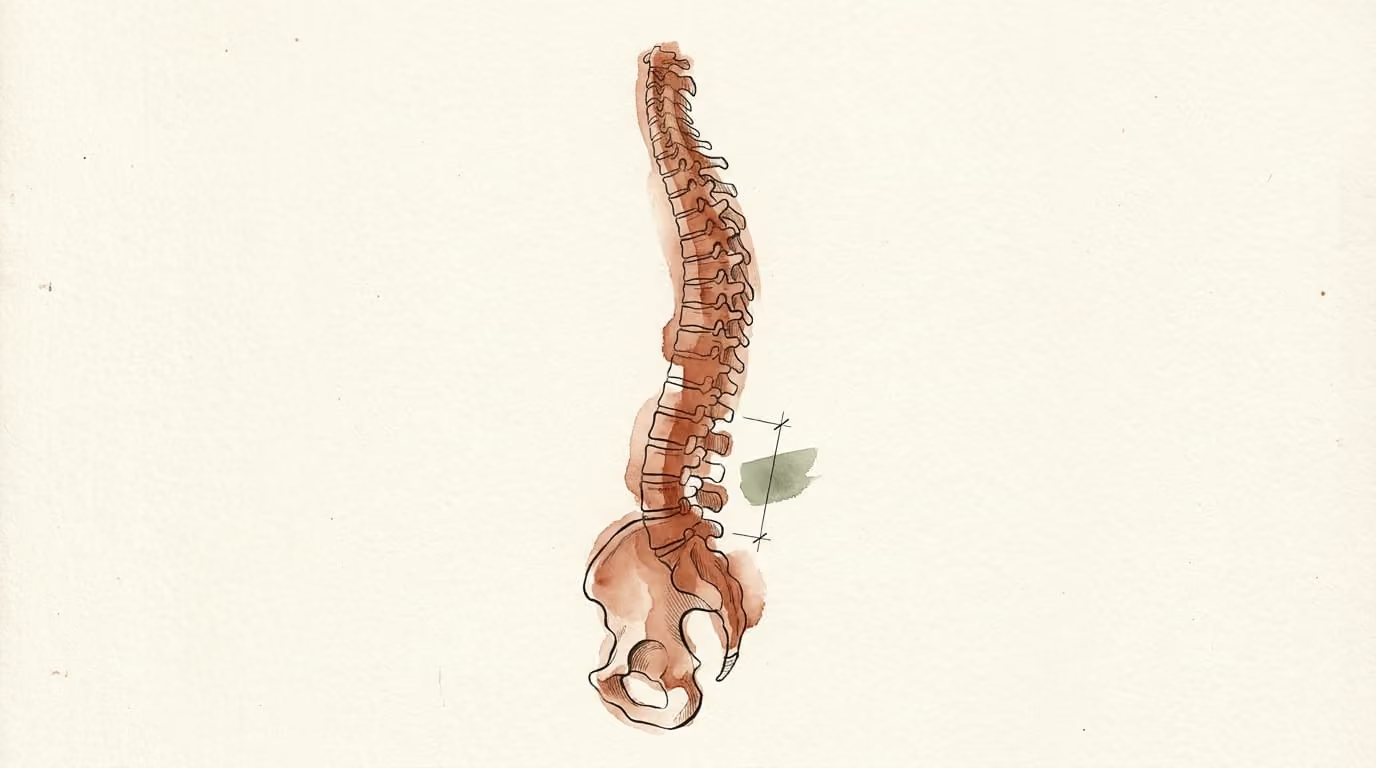
This is the ground where the method stands firm. A meta-analysis pooling nineteen randomized controlled trials (more than eleven hundred participants) finds significant improvements in pain and functional disability — measured with the Oswestry and Roland-Morris scales — in chronic low back pain. With an honest caveat: the older reviews carried methodological problems, so we’re talking about moderate-quality evidence, not a miracle. But for chronic back pain, Pilates is one of the best-supported bets out there.
Balance in Older Adults — The Nuance Almost No One Tells You
Here’s the lesson in humility. Trials robustly show that Pilates improves static and dynamic balance in older adults, with effects on strength and flexibility too. And yet — this is what the marketing leaves out — the evidence doesn’t confirm that it reduces actual falls or the fear of falling. It improves the lab measurement; whether that translates into fewer hip fractures is a separate claim, and one that still hasn’t been proven.
It improves balance on the test; whether it prevents falls is a separate claim, and one that’s still unproven.
Mental Health, Pelvic Floor, Pregnancy
In mental health the evidence is moderate: several trials describe reductions in depressive and anxiety symptoms, promising but far from conclusive. In pelvic floor, diastasis and the prenatal stage, there are ongoing studies and encouraging signals, always with a clear clinical warning — certain exercises are contraindicated depending on the trimester, and that belongs in our Clinic section, not a tutorial.
Underneath all of this is real biomechanics. The transverse abdominis, a deep stabilizer of the spine, activates anticipatorily — before the limb even moves — and the method trains precisely that integration of the lumbopelvic “cylinder.” It’s not magic: it’s motor control. And like the method itself, evidence is a discipline: it demands precision, patience, and not jumping ahead to the result. Telling it in full — gaps included — doesn’t weaken Pilates. It makes it harder to sell, and much harder to refute.
Field Notes
- ×3Consecutive years as the most-booked workout on ClassPass.
- +71%Year-over-year growth in Reformer bookings.
- 11.9MPractitioners in the US in 2023, the highest figure since 2010.