Contrology in Captivity
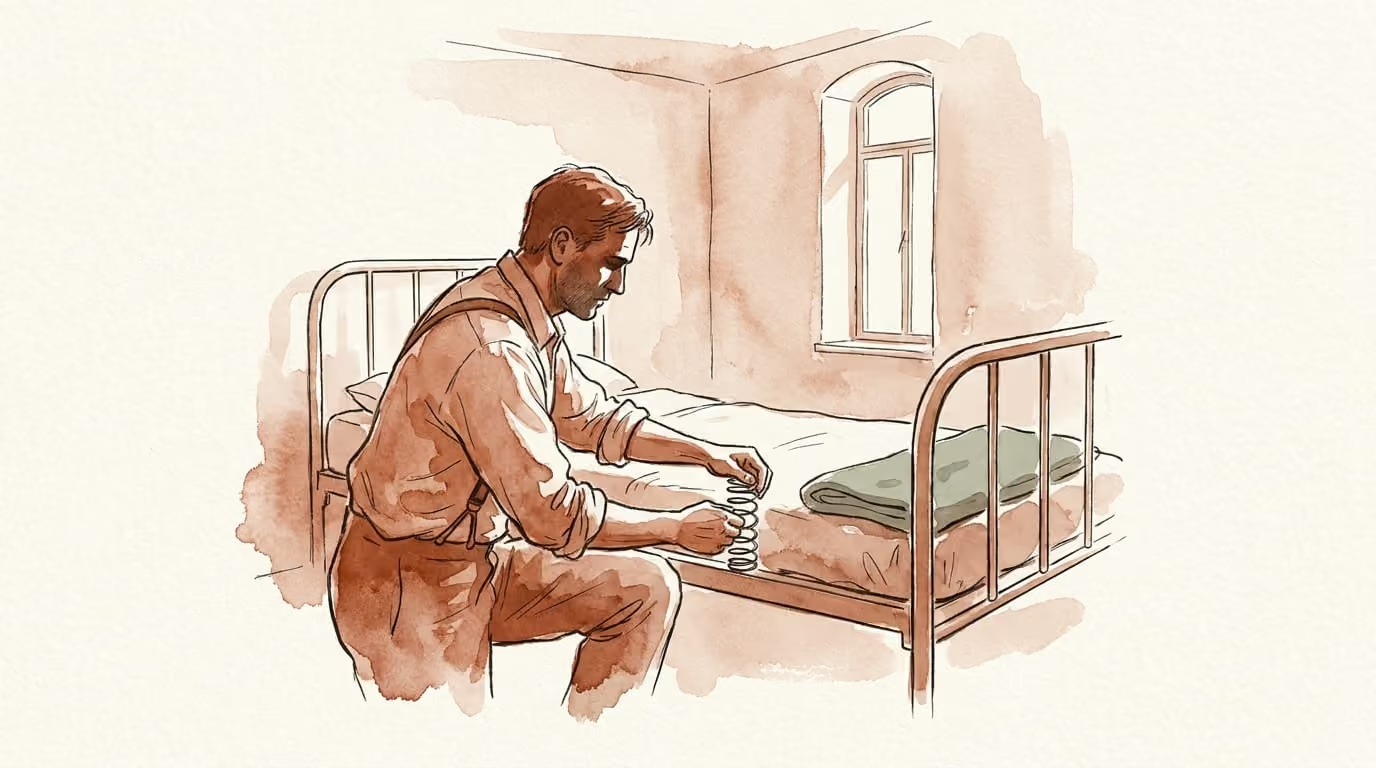
Before conquering Hollywood and social media, the method was born where no one would look for it: in a World War I internment camp, tying bed springs to infirmary bedframes.
Joseph Hubertus Pilates was born in Mönchengladbach in 1883, a sickly child — asthma, rickets, rheumatic fever — who decided to rebuild himself. By his late twenties he was already a boxer, circus performer and self-defense instructor; he had turned his own body into the first experiment of a method that didn’t yet have a name. When the Great War broke out, that body was in the wrong place.
As a German national on British soil, Pilates was interned. First at Lancaster Castle; then at Knockaloe, the enormous camp on the Isle of Man that came to hold more than twenty-three thousand internees. There, between confinement and boredom, he worked as a stretcher-bearer and orderly. And there the method’s founding gesture took place: so that bedridden internees could exercise, he tied springs to the bedframes in the infirmary, turning the furniture into a machine of assisted resistance. The Reformer and the Cadillac — the apparatus that define any studio today — began as exactly that: a bed with springs.
A legend has attached itself to this story: that during the 1918 flu pandemic, none of the internees who followed his regimen died. It’s worth stating precisely — this is a claim from Pilates himself, passed down by word of mouth, not a documented fact. But true or embellished, it condenses his underlying conviction: that conscious movement was a form of medicine.
The Reformer and the Cadillac began as a bed with springs.
In 1926 he emigrated to New York aboard the S.S. Westphalia; on the crossing he met Clara, who would become his partner and silent co-author of the method. They opened a studio on Eighth Avenue, in a building tied to New York’s ballet world — a geographic coincidence that handed him his first clientele: injured dancers who needed to recover without losing form. Word of mouth among the world’s most demanding bodies did the rest.
He never called it “Pilates.” He called it Contrology: the science of control, the integration of the whole body against the exercise of isolated muscles. He set it down in two short, stubborn books — Your Health (1934) and Return to Life Through Contrology (1945) — that read today like manifestos. The method that now drives a multi-billion-dollar industry was born, literally, out of restriction: a man locked away who understood that a spring could support the weak and challenge the strong with the same gesture.