Why Pilates Wanted You to Move Like a Cat
In the middle of the most technical chapter of his 1945 book — the one on blood circulation and breathing — Joseph Pilates stops for two full pages to describe how a cat stretches, relaxes, and sleeps. It isn't an anecdote: it's the movement model he pursued his entire life.
If you had to picture someone explaining what ideal movement looked like in 1945, the image that comes to mind usually isn’t a cat napping. But it’s, literally, the one Joseph Pilates chose. In the middle of the chapter on blood circulation in his only book, he detours for two full pages from the technical subject at hand to describe, with almost ethological detail, how a cat moves — and why that’s exactly what he wanted the human body to do.
The description, almost word for word
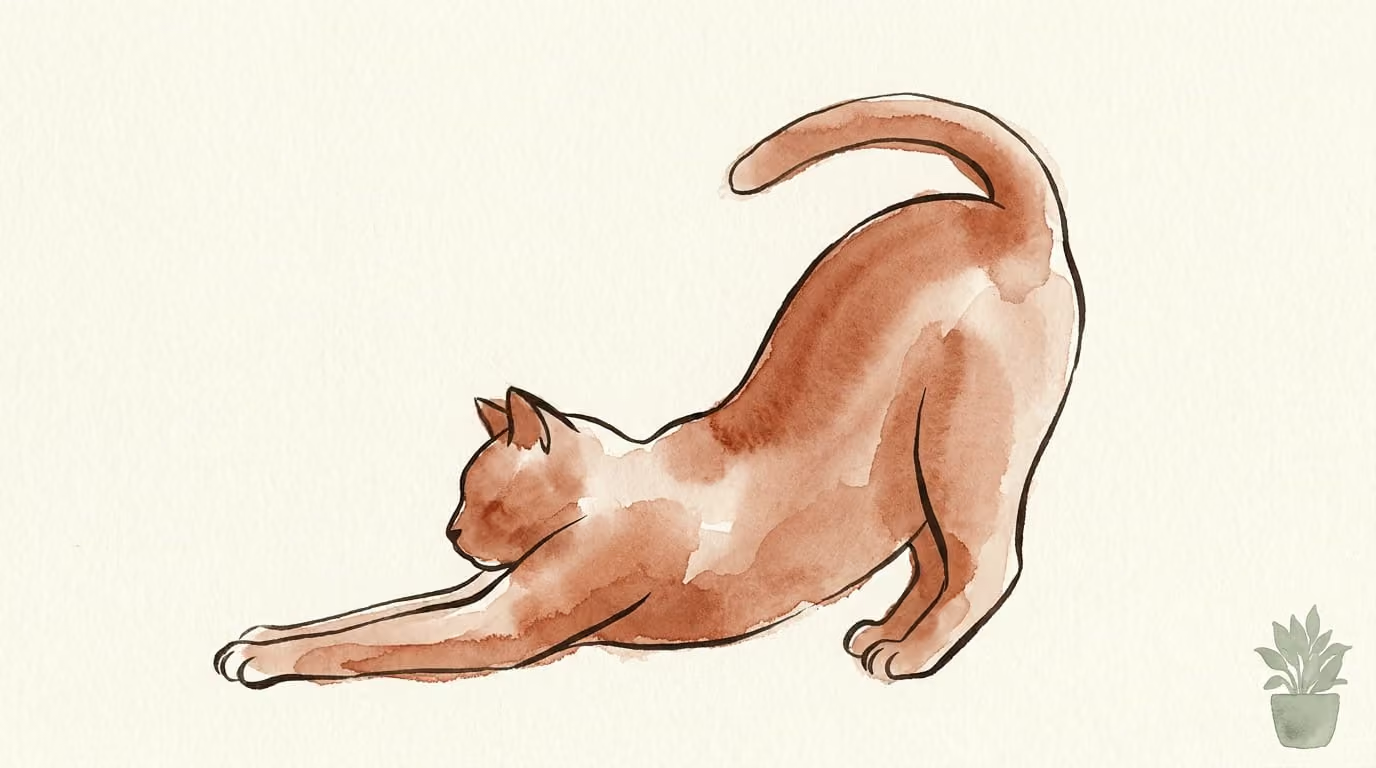
“At the very next opportunity, watch a cat as it lazily opens its eyes, slowly looks around, and gradually prepares to rise after a nap. First, it gradually rises on its hindquarters and then gradually lowers itself again, at the same time sprawling out on the floor, leisurely stretching its forepaws (with extended claws) and legs.” He goes on to describe how “all its back muscles actually ripple” as the cat stretches, and how cats “acquire this ideal rhythm of motion because they are constantly stretching and relaxing themselves, sharpening their claws, twisting, squirming, turning, climbing, wrestling, and fighting.” And he closes with the observation that probably mattered to him most: “observe, too, how cats sleep — utterly relaxed whether they happen to be lying on their back, side or belly.”
“Watch a cat as it lazily opens its eyes, slowly looks around, and gradually prepares to rise after a nap.”
Why a cat, and not an athlete
The choice isn’t casual. Pilates wasn’t after a model of maximum performance — in fact, on the very same pages he explicitly warns against the muscle bulk of “the professional weight-lifter you so much admire in the circus.” He was after a model of natural rhythm and control “observed both in domestic pets and wild animals — without known exceptions,” as he writes a few lines earlier. A cat doesn’t train: it simply lives within a full range of motion, without learned restriction, without the postural rigidity Pilates attributed to decades of chairs, cars, and urban habits. It’s a model of the absence of pathology, not of athletic achievement — and that’s precisely the central idea of all of Contrology: not to artificially add capacity, but to recover the capacity the body would already have if no one had taken it away through bad posture and a sedentary life.
An echo that reaches today without anyone knowing it
Eighty years later, much of the visual aesthetic of contemporary Pilates — the fluid stretch, the idea of “waking up” the body, the vocabulary of grace and control instead of raw force — has a direct, if almost never cited, relationship to those two pages about cats. No mystical reference or imported discipline is needed to explain why the method values fluidity of movement so highly over raw power: it’s written, claws and all, on an early page of the founding book itself.
Field Notes
- 2Full pages Return to Life Through Contrology devotes to describing cats' physical behavior as a model of ideal movement.
- 0Times the 1945 book mentions the word 'yoga' or any other Asian discipline, despite the visual similarities often attributed to it today.
- 1Animal Pilates explicitly chose as his reference for natural movement — not the Olympic athlete, not the dancer: the house cat.