The Lifestyle Manual Joseph Pilates Wrote in 1945
Dry-brushing the skin. Sleeping without a pillow. Sunbathing in shorts. Before the word "wellness" existed, Pilates had already written his own lifestyle manual — and it reads with an uncomfortably familiar tone from 2026.
Before there was an algorithm telling us to drink more water, before there was a supplement market or the word “wellness” existed, a German-born immigrant in his early sixties wrote, in 1945, an entire section on how to live day to day outside the gym. It doesn’t show up in the usual summaries of the method: it’s buried between the philosophy of Contrology and the instructions for the thirty-four floor exercises, in the section Pilates devoted to breathing and blood circulation. But there, between paragraphs on the spine, is an almost complete lifestyle manual. And it reads with a familiarity that’s a little uncomfortable.
The skincare routine a wellness brand would sell today
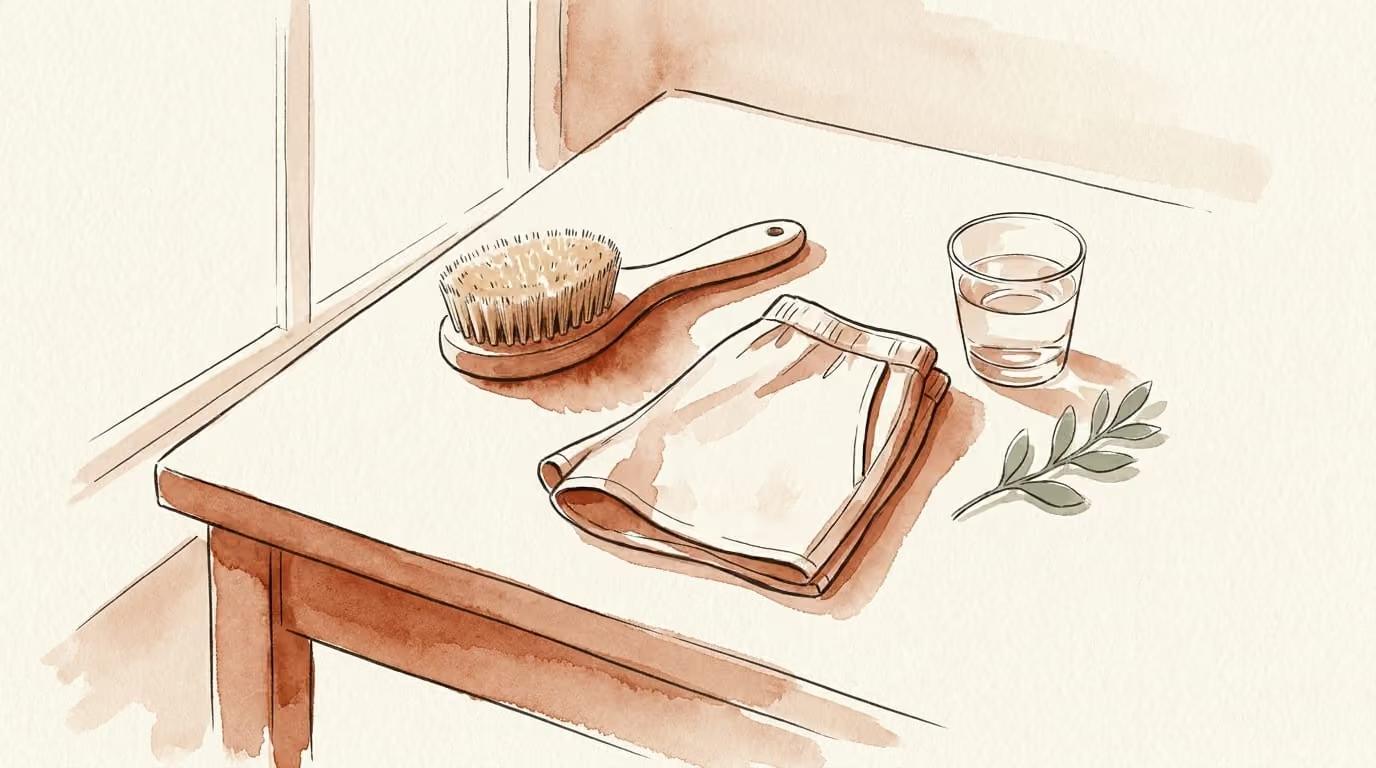
Pilates was categorical about one specific ritual: dry body brushing. Not a sponge, not a mitt — “a good stiff brush (no handle),” precisely because that kind of brush “forces us to twist, squirm, and contort ourselves in every conceivable way” to reach every part of the body, turning hygiene into another exercise. The goal, he writes, is for the skin’s pores to “breathe” — they must be kept “open and freed from clogging.” Seventy-eight years before dry brushing became a staple of every wellness account on social media, Pilates was already prescribing it in almost the same words: stimulate circulation, clear the pores, leave the skin “new, fresh, glowing.”
Sleep as a discipline, not an accident
He’s just as specific about sleep. A quiet, cool, well-ventilated room. A firm mattress — “‘firm but not soft’ is a good rule to follow” — the lightest bedding consistent with warmth, and on the pillow, a position that was almost radical for the era: none at all, or at most one, never two stacked. And if you can’t sleep, his advice isn’t to stay in bed turning it over in your head: “it is far better to be tired from physical exertion than to be fatigued by the ‘poisons’ generated by nervousness while lying awake.” Get up and move. Sleep hygiene, decades before any podcast explained it to anyone.
Seventy-eight years before dry brushing on social media, Pilates was already prescribing it in almost the same words.
Excess weight as luggage nobody checks
His favorite metaphor for accumulated body fat is probably the most vivid passage in the whole book. Picture yourself carrying a 20-pound travel bag on a trip: the first block or two don’t weigh anything, but the fatigue builds relentlessly with every following block, until reaching your destination is real physical relief. The extra weight we carry on our own bodies, he writes, is exactly the same thing — except “the weight is carried by the entire body instead of by your carrying arm alone as in the case of the bag,” so almost no one notices how much energy it’s stealing. It isn’t a new idea today. What’s striking is that he wrote it this way, with such a concrete image, in a technical exercise book from 1945.
Eating to refuel, not to satisfy appetite
On diet, Pilates doesn’t prescribe a meal plan — he prescribes a relationship with food based on actual expenditure: eat “only enough food to restore the ‘fuel’ consumed by the body,” adjusting quantity and type to each person’s activity level, with a small reserve for emergencies. “Merely eating to satisfy one’s lust for good food is both foolish and dangerous to one’s health,” he warns — energy that isn’t burned becomes, in his account, tomorrow’s fatigue. He adds a medical recommendation any preventive-health system today would sign off on: a check-up with your family physician every three months after age forty, or at least once a year before that.
Why this matters today
None of this advice is, on its own, revolutionary in 2026 — it’s precisely the opposite that makes it interesting. Pilates doesn’t present it as an accessory to an exercise regimen, but as an inseparable part of the same discipline that underpins the mat work: the same demand for attention and control he asks for a Roll-Up, he asks for how you sleep, how you eat, and how you brush your skin. Contemporary wellness usually markets itself as an invention of the last decade. This chapter, written by a man who was a boxer and circus performer before he was a guru, suggests the impulse is much older — and that Pilates, long before there was an industry behind it, had already written almost all of it down.
Field Notes
- 3Months between medical check-ups Pilates recommended for anyone over 40, in his 1945 book.
- 20 lbThe weight of a travel bag Pilates uses as a metaphor for the unnecessary excess weight the body carries without anyone noticing.
- 0Pillows he recommends using in bed — one at most, never two stacked.